By
C. M. Smith Rich, Owner/Steward
El Mesteño Ranch ®
Spring and Summer 2026 on the South Texas Sand Sheet in Puerto Rico, Texas, have been nothing less than unprecedented and remarkable with regard to our rare, Texas native bee, the Mesoxaea texana (Mt). Several noteworthy events have transpired over the 13.571-week emergence cycle I have recorded regarding the Mt, including the return of “El Glorioso” and his bride to the South Texas Sand Sheet. The events are as follows:
The longest emergence cycle—to date—documented for Mesoxaea texana!
First observed and documented on April 21st, 2026, all the way through July 24th, 2026, the Mt’s current, documented 95-day emergence cycle is record-breaking and unprecedented in terms of the length of cycles I have documented and recorded for them in my phenology journal over the past several years.
This 13.571-week emergence blows away all Mesoxaea texana emergence cycles I have documented to date.
Female Mesxoaea texana found already expired on July 13, 2026.
An expired female Mesoxaea texana was found on the red, sandy soil of El Mesteño Ranch ® on July 13, 2026, as native bee walking surveys were being conducted.
Although encountering this expired female was a sad moment for me, it did afford me the opportunity to take a few micrographs of her for us to review, enjoy, and learn from.


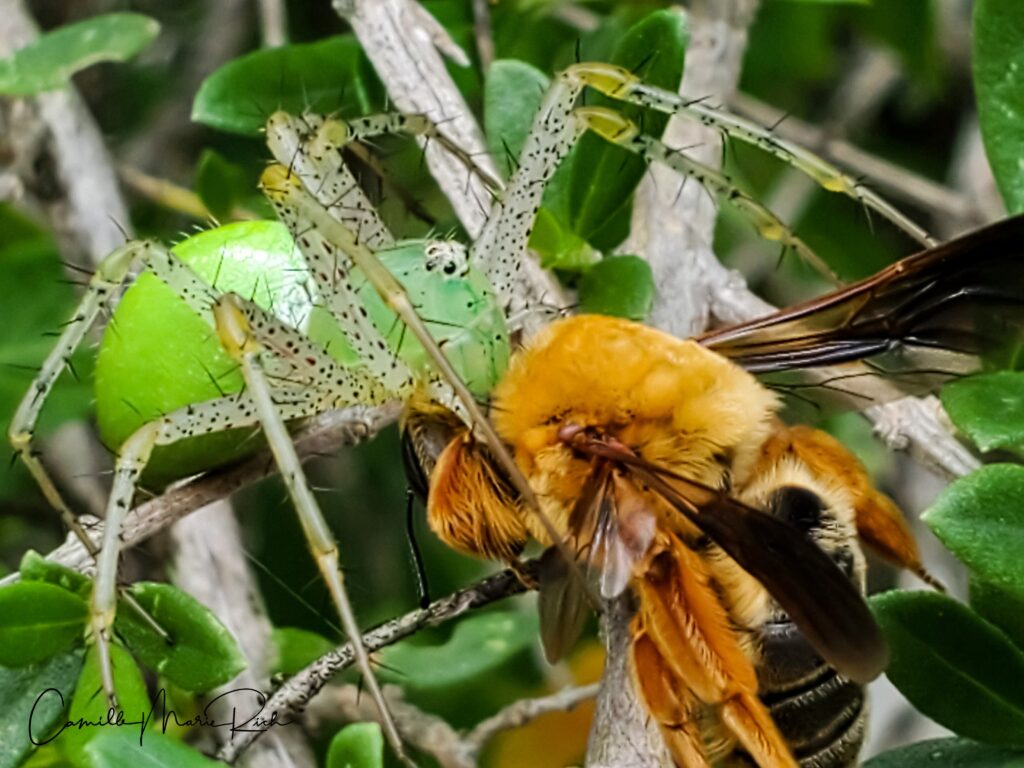
Male Mesoxaea texana expired on July 13, 2026, due to predation.
Regrettably, I must additionally report that a Lynx spider, a stealthy ambush hunter, unalived a male Mesoxaea texana as it was foraging on Waltheria indica.
This is the 2nd documented occurrence of this predator-prey relationship. The upside: It was not a female Mesoxaea texana.
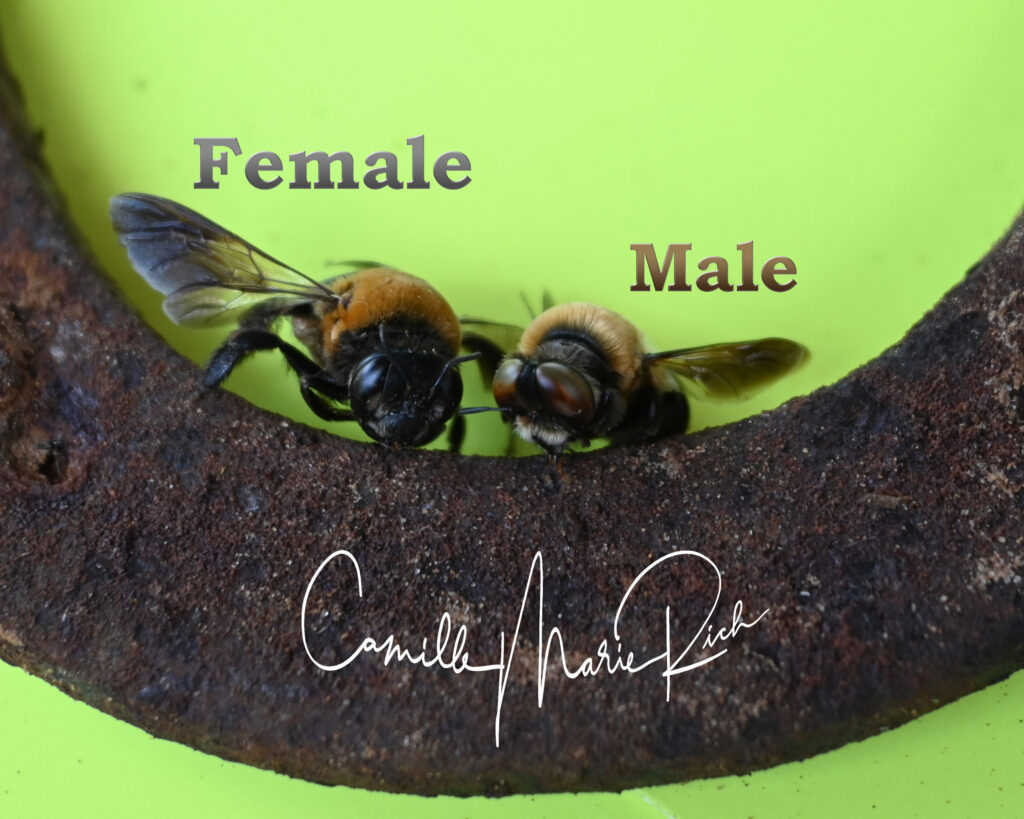
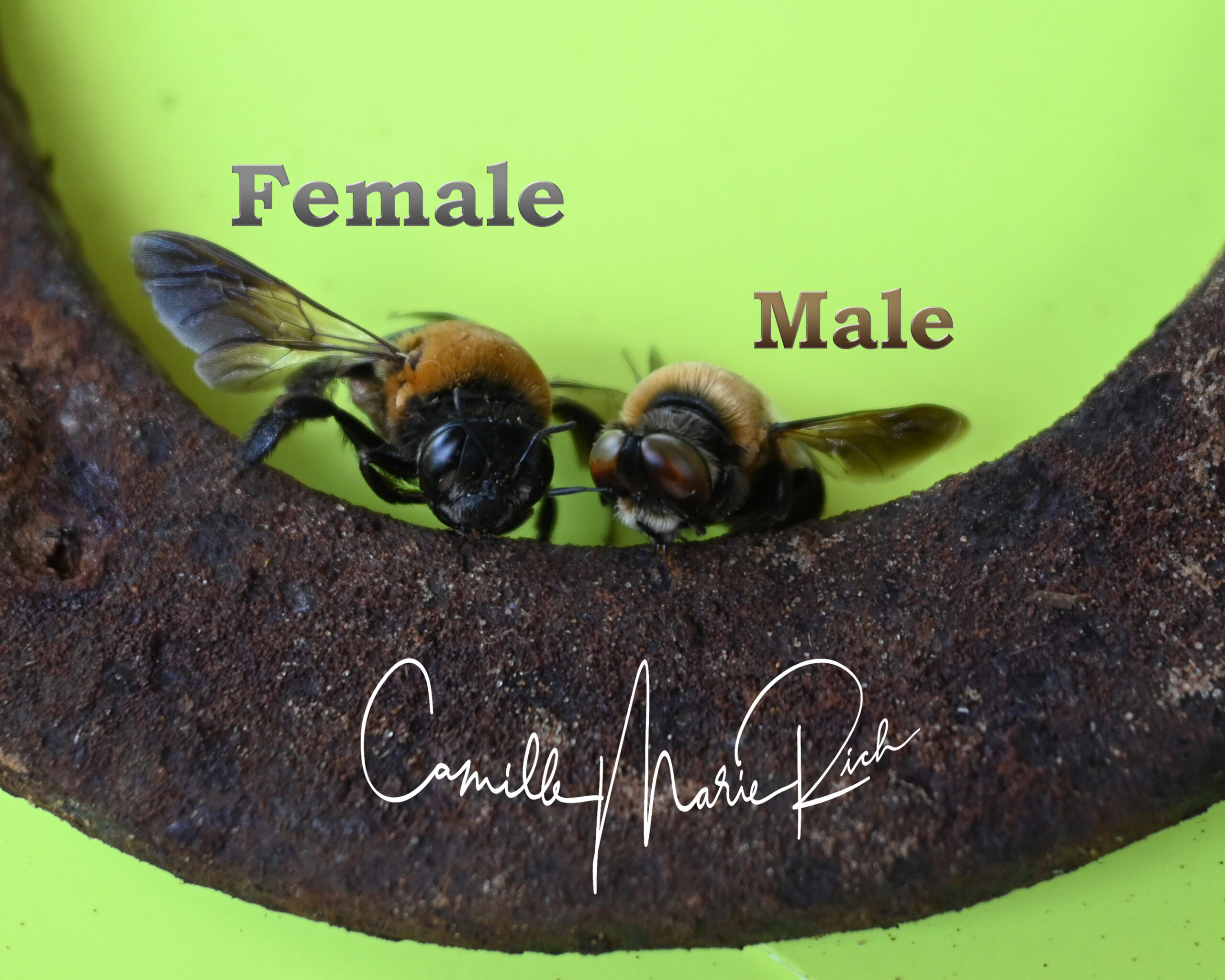
Side by side comparison of an expired male and female Mesoxaea texana:
Both of these bees were found on the same day: July 13, 2026.


Based on data collected, I am attempting to dial down on a time frame for the life cycle of “El Guapo.”
A single, deceased male Mesoxaea texana was found on June 6, 2026.
If I take a very generalized approach to trying to determine the length of time for a Mesoxaea texana life cycle on the South Texas Sand Sheet based on this expired male–using April 21, 2026, as the observed, documented, and recorded starting point for its most recent emergence cycle—here is the number I extrapolated for this occurrence:
April 21, 2026, to June 6, 2026 = 47 days / 7 days in a week = potentially a 6.71-week life cycle for this specific, expired male found on June 6, 2026.
Could there be multiple generations of Mesoxaea texana flying out over the South Texas Sand Sheet at the same time?
The expired female found on July 13, 2026, appeared to have died of natural causes. When I saw her that day, my first thought was, “A lot of time has passed since these bees were first observed on April 21, 2026, to now. Could this be a second-generation female out for this emergence cycle?”
The expired male also found on July 13, 2026, was predated by a Lynx spider.
I applied some basic math to my question as follows:
As noted previously, using April 21, 2026, as the observed, documented, and recorded starting point of the Mesoxaea texana’s most recent appearance on the South Texas Sand Sheet: April 21, 2026 – July 13, 2026, is 84 days / 7 days in a week = potentially a 12-week life cycle for the expired male and female Mesoxaea texana bees found on July 13, 2026.
12-week emergence/life cycle vs. 6-week emergence/life cycle
The 12-week life cycle I extrapolated from known data points for the expired female and male Mesoxaea texana found on July 13, 2026, would be double the 6.71 life cycle number I extrapolated for the deceased male Mesoxaea texana that was found on June 6, 2026.
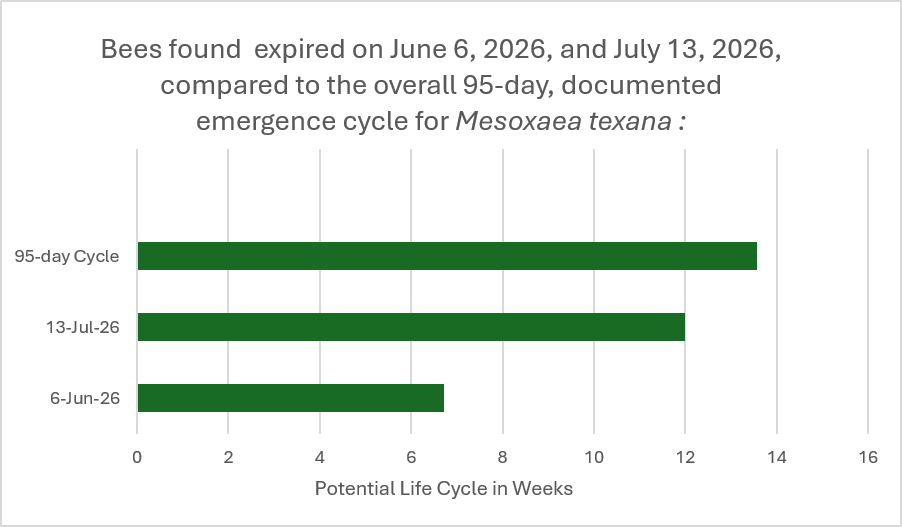
How did the two bees found on July 13, 2026, live potentially twice as long as the expired male found on June 6, 2026?
Did the bees found on July 13, 2026, really live twice as long as the bee found on June 6, 2026, or is this a key data point in the detailed documentation in my phenology journal that suggests that the 6.71 week average extrapolated for the deceased male found June 6, 2026, is a fairly accurate length of life cycle for the Mesoxaea texana on the South Texas Sand Sheet?
- I have read and studied a journal article by Jerome G. Rozen, entitled, “Nesting Biologies and Mature Larvae of Oxaeine Bees (Apoidea: Andrenidae).” Source: American Museum Novitates, 2018(3893): 1 – 31. Published by: American Museum of Natural History. [Accessed online on October 7, 2024.]
- This article suggests that there is a possibility that “Oxaea and Protoxaea sometimes may have multigenerational nests, occupied by subsequent generations…” [page 13]
- Consequently, are we getting a glimpse into the fact that these bees might possibly have had a couple of generations flying out on the South Texas Sand Sheet over the course of the 95-day emergence cycle that was documented from April 21, 2026, through July 24, 2026, which averaged 13.571 weeks?
More data is needed to fully explore—and potentially answer—my initial question regarding how long the life cycle of a Mesoxaea texana actually is.
Mesoxaea texana behaviors observed/documented from 2021 – 2026:
- Territorial Aggression
- Combat Behaviors Observed:
- Head-butting aka “Booping”
- Dive-Bombing / Shoving
- Grappling / Wrestling, aka “Bee-Nado”
- Combat Behaviors Observed:
- Territorial Patrol
- Hovering
- Zooming
- Challenging
- Foraging
- Grooming
- Copulation
Observed, documented associated taxa for the Mesoxaea texana from 2021 – 2026:
- Waltheria indica / Hierba Del Soldado
- Eysenhardtia texana / Texas Kidneywood
- Aloysia gratissima / White Brush / Common Bee Brush
- Citharexylum berlandieri / Berlandier’s Fiddlewood
- Cynanchum barbigerum / Thicket Threadvine / Aphid Vine
- Funastrum cynanchoides / Climbing Milkweed
- Salvia ballotiflora / Shrubby Blue Sage
- Chloroleucon ebano / Texas Ebony
- Caesalpinia mexicana / Mexican Caesalpinia
- Clematis drummondii / Old Man’s Beard / Barbas De Chivato
- Lippia graveolens / Mexian Oregano / Redbrush Lippia
- Florestina tripteris / Three Lobed Florestina
The “Primos” are back!
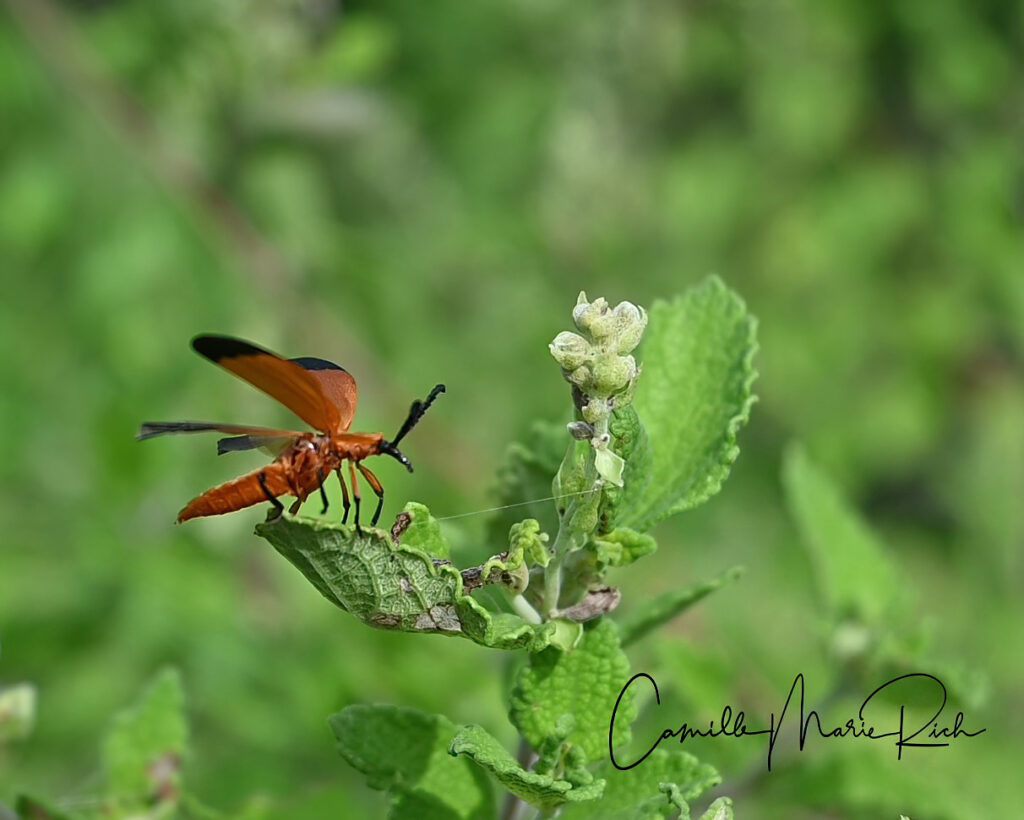
“El Glorioso” and his bride—“El Guapo’s” cousins— returned to the South Texas Sand Sheet in 2026! They were observed, documented, and recording from May 20, 2026, through July 13, 2026. This brings the Protoxaea gloriosa’s documented and recorded emergence cycle for 2026 to approximately 55 days. This also a record-breaking, documented recorded emergence/life cycle for this rare bee at El Mesteño Ranch® located in Puerto Rico, Texas, in 2026!
Net-new location for “El Guapo” & “El Glorioso”: Dr. Steve Bentsen’s Dos Venadas Ranch, located in Starr County, Texas!
Both Mesoxaea texana and Protoxaea gloriosa found at Dos Venadas in Starr County, Texas, in June 2026!
As always, thank you for time and visit to the website!
- “Mind-boggling: 95-day Emergence Cycle for the Mesoxaea texana on the books for 2026 on the South Texas Sand Sheet!”
- “Micrograph Photo Gallery of a female Mesoxaea texana”
- “Mesoxaea texana and Protoxaea gloriosa found on Dr. Steve Bentsen’s Dos Venadas Ranch in June 2026!”
- 2025 was a Banner Year for our Mesoxaea texana on the South Texas Sand Sheet in Puerto Rico, Texas!
- “El Glorioso,” our Protoxaea gloriosa, is back on the South Texas Sand Sheet!